
DHS Ends Automatic Extension of Employment Authorization
Nov 13, 2025 - Alerts by Hinkle Law Firm
To read this in PDF format visit here.
Certain foreign nationals in the United States are eligible to apply for
employment authorization by filing Form I-765 with U.S. Citizenship and
Immigration Services (USCIS). Under previous temporary final rules, USCIS granted eligible foreign nationals an automatic extension of employment
authorization (evidenced by an employment authorization document or “EAD”) for up to 540 days while their timely filed employment authorization
applications were pending adjudication. However, under the Department of Homeland Security’s most recent interim final rule, foreign nationals who file to renew their EAD on or after Oct. 30, 2025, will no longer receive an
automatic extension of their EAD.
While there are limited exceptions to this rule, the practical implication for
employers is that employees who rely on a valid EAD as their sole basis for
employment authorization may face a gap in employment authorization.
This may result in an increased risk of employer I-9 non-compliance and
significantly impact business continuity, particularly for employers with large
numbers of EAD-dependent workers.
The interim final rule does not affect EADs automatically extended before Oct. 30, 2025. If an EAD renewal application (Form I-765) was timely filed before the EAD expiration and before October 30, 2025, then it is not impacted and the foreign national employee applicant is still eligible for an auto-extension of employment authorization. If an EAD renewal application (Form I-765) is filed on or after October 30, 2025, then it is impacted by the policy change. impacted individuals will need a valid EAD in hand to continue working. Under the
interim final rule, the following EAD categories are no longer eligible for
automatic extensions of employment authorization:
• A03: Refugees
• A05: Asylees
• A07: Certain parents/dependent children of special immigrants
• A08: Certain citizens of Micronesia/Marshall Islands/Palau
• A10: Granted withholding of removal
• A12/C19: TPS beneficiaries and TPS applicants with temporary treatment benefits
• A17: E-1/E-2/E-3 dependent spouses
• A18: L-2 dependent spouses
• C08: Pending asylum applicants
• C09: Pending adjustment of status applicants
• C10: Suspension of deportation/cancellation of removal applicants
• C16: reation of record applicants
• C20/C22/C24: Legalization applicants
• C26: H-4 dependent spouses
• C31: VAWA self-petitioners
The applicable category of employment authorization is listed on an employee’s EAD:
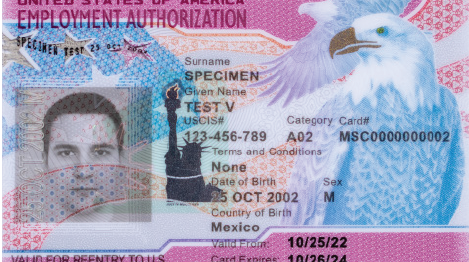
USCIS recommends foreign nationals seek a timely renewal of their EAD by properly filing a renewal application up to 180 days before their EAD expires. Yet, as of November 7, 2025, over 900,000 EAD applications received by USCIS had been pending for more than six months. As such, the longer a foreign national waits to file an EAD renewal application, the more likely it is that they may experience a temporary lapse in their employment authorization or documentation.
Next Steps for Employers
Employers should immediately assess which employees may be affected by the new rule, and closely monitor EAD processing times. Employees may apply for EAD renewal up to 180 days before the expiration date of their current EAD. Employers should reinforce this timeline with impacted employees to avoid work authorization gaps and minimize the risk of I-9 noncompliance. Without automatic extensions, delays in EAD processing may lead to employees abruptly losing work authorization. Employers should develop contingency plans for any critical roles currently filled by EAD-dependent employees. In addition, employers should assess and update existing I-9 policies and procedures to reflect the end of automatic extensions for most EAD categories.
If you or your employees have questions regarding this change, or other immigration related issues, please contact Attorney Jordan Ford at (316)-666-6505 or jford@hinklaw.com.